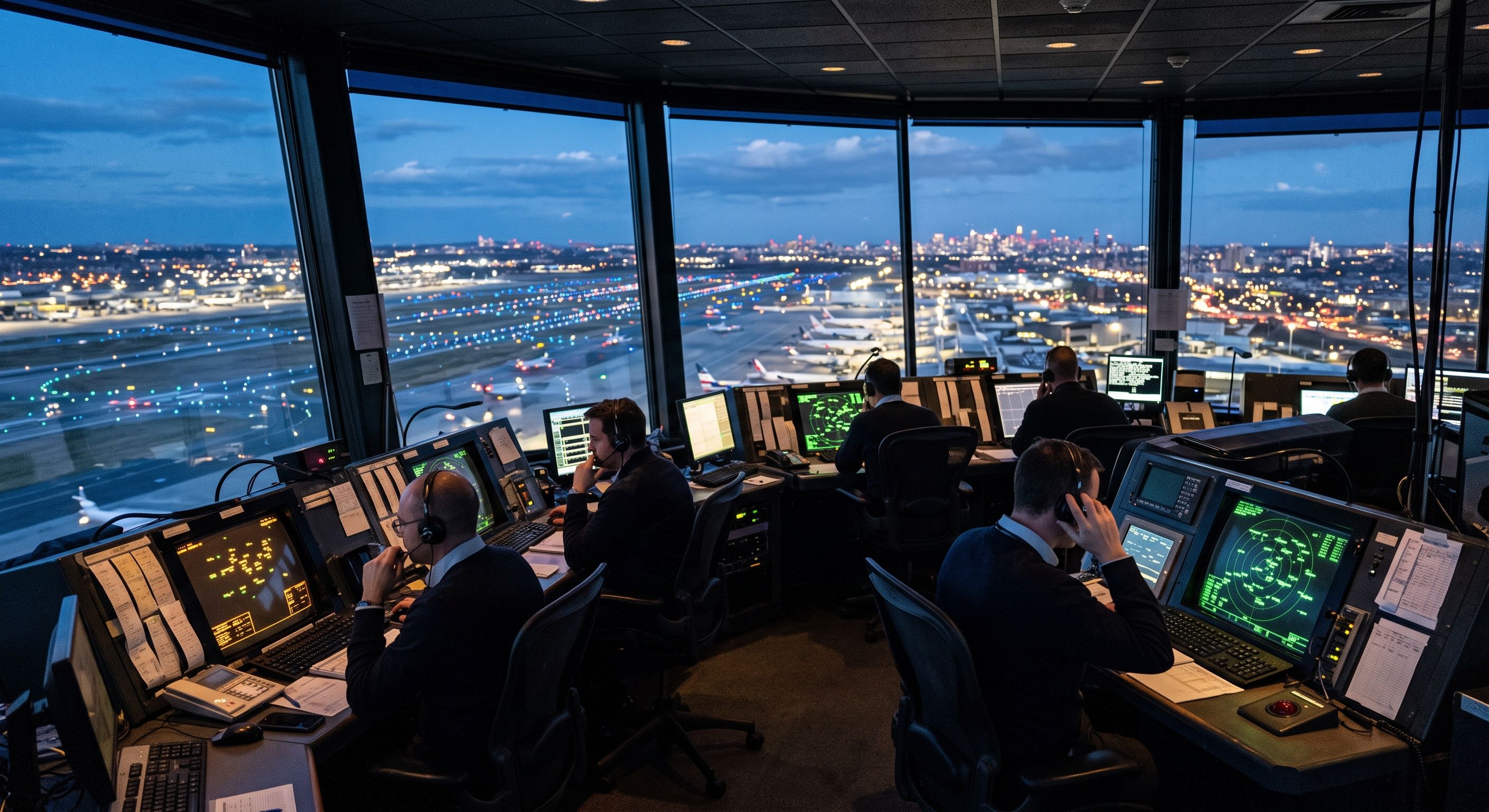
The Six-Figure Job That Forces You to Retire at 56… and Nobody Wants It

One of the highest-paying jobs in the federal government requires you to leave nearly a decade before a commercial airline pilot
It's one of the best-paying jobs in America that doesn't require a traditional college degree. Many pull in well into the six figures, with a federal pension, health insurance, and a critical role: keeping millions of passengers safe every single day.
And yet, the profession is facing a deepening staffing crisis. And there's one roadblock that isn't budging: federal law requires most air traffic controllers to retire at 56.
The Federal Aviation Administration (FAA) keeps on hiring — including positions at airports like Detroit Metropolitan — as part of a nationwide push to fill a workforce that, by the agency's own admission, is running thousands of controllers short of its target level.
The age ceiling nobody talks about
Unlike airline pilots, who under federal rules can fly until 65, controllers have to leave the profession nearly a decade earlier, regardless of their experience. The Secretary of Transportation can grant limited exceptions up to age 61, but those waivers are rare and reviewed on a case-by-case basis.
The FAA says it has no plans to change the mandatory retirement age. Instead, it's betting on recruiting younger controllers and paying retention bonuses to keep those who are already eligible to retire on the job until they hit the legal limit. The agency has already spent more than $12 million on those bonuses — but admits many controllers still leave before they turn 56.
The rule goes back to 1971. An FAA report from 2005 notes that Congress set the cap largely based on anecdotal concerns: that older controllers might struggle with rapid decision-making. At the time, no scientific evidence was presented showing that controllers over 56 actually make more mistakes.
Big paychecks, extreme pressure
According to the U.S. Bureau of Labor Statistics, the median annual salary for a controller tops $140,000. At larger facilities, with overtime and shift differentials, that number can go much higher. A college degree isn't required either: many enter through the FAA's training program, after military service, or after completing an agency-approved intensive course.
The other side of the deal is brutal. You're tracking dozens of aircraft at once, managing delays, reading weather, and making split-second calls. Long shifts, constant stress, and the ticking clock of mandatory retirement are all fueling the shortage: the FAA estimates more than 700 controllers will retire over the next three years.
Industry organizations, like the Air Traffic Control Association, argue the focus should be on modernizing outdated technology before reopening the debate on retirement age.
The staffing paradox
On forums and social media, the same question keeps coming up: if a pilot can safely fly until 65, why does a controller have to leave at 56? Others point out the absurdity of investing years in training highly skilled professionals… only to push them out the door right when the system is desperately short-staffed.
For now, the requirement stands. One of the best-paying careers in American public service keeps losing valuable experience long before many controllers are ready — or willing — to step away from the radar.